viernes, 2 de octubre de 2020

Water tratament

Introduction to the problem of water

Water is at the epicenter of sustainable development and is essential for socioeconomic development, energy, food production, ecosystems, and for the survival of human beings. Water is also a crucial part of adaptation to climate change, and is a crucial link between society and the environment. (United Nations, 2019)

Today and despite the great technological development that we have worldwide, water scarcity continues to exist, according to United Nations data, more than 2000 million people around the world lack access to drinking water services, when according to studies, if water It will be managed in a good way, it would reach all of humanity, but what do we really have to focus on?


Un niño refugiado rohinyá lleva agua a su campamento en Cox's Bazar, Bangladesh. (Imagen: UNICEF/Patrick Brown)


Present


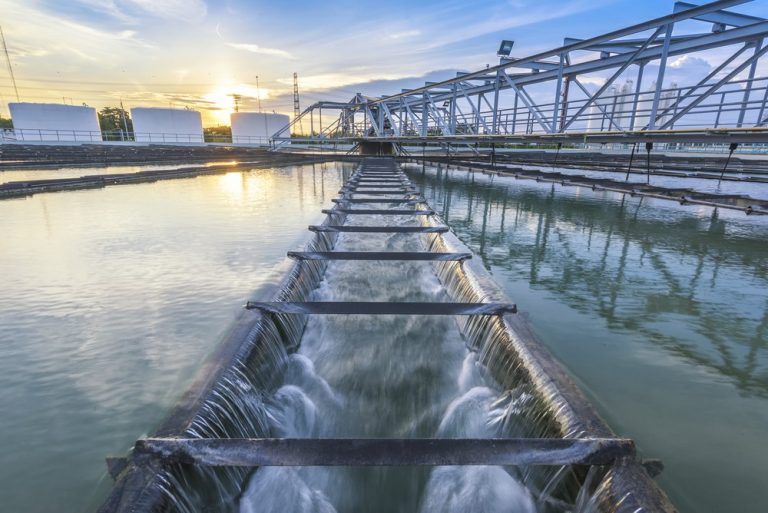
Currently large companies are betting on water treatment, which has already been seen to be a profitable business and can help solve this problem, since more than half of the world population has problems with water sanitation according to data from nations united. The treatment of water, whether for purification or for wastewater, requires large projects that cover the most urban and populated areas of the world, with a good distribution and filtration system.


In addition, another big problem is the great contamination of water, which is mainly being affected by the industrial sector, without diverting the blame from society. But in general, humans are the main cause of water pollution. More than 80% of wastewater resulting from human activity is discharged into rivers or the sea without any type of water treatment, which causes its contamination.


So how can we solve the problem? Through water treatment, a process with operations of different types (physical, chemical, physical-chemical or biological) whose objective is the elimination and / or reduction of pollution or undesirable characteristics of the waters.


Drinking water


Despite the fact that the processes can be varied, the most common steps to make water drinkable are:

  1. Water pretreatment: It consists of removing large solids. A grate is usually placed to prevent fish or branches from leaking. Then, with the help of a sand trap, the sand is separated from the water to prevent it from damaging the pumps of the water treatment plant.

  2. Coagulation - Flocculation: Low pressure pumps transport the water to a mixing chamber, where the components that make the water drinkable are incorporated. In this phase, the pH is adjusted by adding acids or alkalis and coagulating agents are added to the water.

  3. Settling: In the decanter the suspended particles carried by the water are separated by gravity. The denser noxious sediments remain at the bottom, where they are removed and the less dense ones continue to dissolve in the settled water.

  4. Filtration: After the decantation process, the water is passed through a porous medium to remove the less dense sediments. These filters finish straining impurities.

  5. Water disinfection: Finally, chlorine is added to eliminate any type of bacteria or virus.

  6. Analysis: It is essential to carry out various analyzes of the water to ensure that the process has been successful. Drinking water should be colorless, odorless, and tasteless.


Conclusion

As we can see, a common water treatment plant has enough safety and quality controls, so that the water reaches us free of dangerous substances, unfortunately one of the global problems is that not all countries have access to this type of technology because of the high cost, that is why many underdeveloped countries do not have water treatment plants.


This is where international cooperation must come in, to establish water treatment plants in underdeveloped areas and without access to this vital liquid for life, this problem affects millions of people and unfortunately also causes millions of deaths a year.


jueves, 1 de octubre de 2020

Heat equation

 Heat is the process through which thermal energy is transferred between bodies.

Hot :

The particles of the bodies are not at rest but are in constant agitation. As a consequence of this agitation, bodies have a certain thermal energy. Temperature is an indicator of the thermal energy that bodies have. In general, we can say that the higher the temperature, the higher the energy of this type. Well, bodies and systems can exchange thermal energy. This exchanged thermal energy is called heat. Sometimes the process of energy transfer itself is also called heat.

Heat equation:

It is an important differential equation in partial derivatives of the parabolic type that describes the distribution of heat (or variations in temperature) in a region over the course of time.

The heat equation is obtained from Fourier's law and the principle of conservation of energy. According to Fourier's law, the rate of change of heat energy flux per unit area through a surface is proportional to the gradient negative surface temperature


Where k is the thermal conductivity and u is the temperature. In one dimension, the

gradient is an ordinary spatial derivative, and so Fourier's law is:


 The heat equation governs the diffusion of heat, that is, it is another diffusion process, such as the diffusion of particles or the propagation of the action potential in neuronal cells. However they are not diffusive in nature, some quantum mechanical problems are also governed by an equation analogous to the equation of heat.

"The deep study of nature is the most fertile source of mathematical discoveries."